


Shoulder Pain & Limitation in Eugene, Oregon
Most rotator cuff and impingement presentations respond to strength and mechanical movement retraining, not surgery. Our DPTs identify what's actually driving your shoulder pain and build a progressive plan that doesn't require you to stop training.

7
conditions treated
3rd
most common musculoskeletal complaint in sport is shoulder pain.
★★★★★
5.0
243 verified Google reviews
We Treat 7 Shoulder Conditions



About Shoulder Pain in Eugene
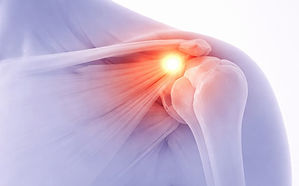
Shoulder pain in active adults is among the most frequently misdiagnosed and overtreated orthopedic conditions. Rotator cuff tears visible on MRI are present in over 50% of asymptomatic adults over 60 and do not, by themselves, indicate the need for surgery. Subacromial impingement, once thought to be a structural problem requiring surgical decompression, is now understood to respond as well or better to exercise-based physical therapy in the majority of cases. The evidence base for conservative management of shoulder pain in active adults is strong, and surgery should be reserved for cases that have failed a genuine course of supervised rehabilitation.
For Eugene's active population, shoulder pain most commonly presents in three contexts. The first is overhead athletes and climbers, where rotator cuff strength and scapular control deficits produce impingement or superior labral pathology under repeated overhead loading. The second is cyclists, who sustain the shoulder girdle in a protracted, internally rotated position for hours, creating thoracic stiffness and posterior capsule tightness that alters glenohumeral mechanics. The third is aging athletes maintaining strength training or recreational sport, where accumulated wear produces rotator cuff tendinopathy or partial thickness tears that respond well to progressive loading if managed correctly.
The common thread across all three is that the shoulder joint itself is rarely the primary problem. Thoracic mobility, scapular stability, and rotator cuff strength relative to the demands of the activity are the drivers. Our DPTs assess the full system, from thoracic spine through scapula to glenohumeral joint, and build a loading program that addresses the actual deficit rather than treating the pain location in isolation.
WHY DIRECT-CARE PHYSICAL THERAPY FOR SHOULDER PAIN IN EUGENE
Shoulder conditions are among the most common reasons for unnecessary orthopedic surgical referral in the United States. The standard pathway frequently bypasses adequate conservative management in favor of imaging and specialist consultation. At Zenith, you get a thorough mechanical assessment on the first visit and a progressive loading program that gives conservative management a genuine trial, which is what the evidence recommends. If you need surgical consultation after that, we will tell you clearly and refer appropriately. Most athletes don't.
FIND US
Zenith Performance & Wellness is located at 160 S. Park St., Eugene, OR 97401. Call 541-250-0195 or book online. Same-week appointments are typically available.
Rehab PT to Performance PT
Consider starting with rehab PT and transitioning to performance PT as you progress.